What Changes at the Farmers Market in the First Week of September?
Quick Answer: The first week of September is when summer crops hit their final flush and autumn crops arrive at their first, which means tomatoes, peppers, corn, and stone fruit are at their cheapest and best right before they disappear, while winter squash, apples, and the first brassicas appear at their highest prices of the year. Buy the departing crops in bulk to preserve, and wait two to three weeks on the arriving ones.
The market looks the way it looked in August. Same stalls, same faces, roughly the same layout. But this specific week is the hinge of the entire year, and if you shop it the way you shopped last week you will pay the most for the worst things and miss the best deal of the season.
Why is this particular week different?
Because two seasons overlap for about ten days, and then they do not.
Summer crops are finishing under pressure. Tomatoes, peppers, aubergines, cucumbers, and beans all respond to shortening days and cooling nights by ripening what they have rather than setting new fruit. Growers know their remaining crop has a deadline, which is why volume spikes and prices drop.
Autumn crops are arriving at their thinnest. The first winter squash, the first apples of the local varieties, the first proper brassicas. Early supply is limited, demand is high because everyone is excited about autumn, and prices reflect both.
The overlap is short. Depending on your region and the weather, you get roughly two to three weeks where both are available. In a year with an early cold snap, considerably less.
Growers behave differently this week too. End-of-season selling is a different activity from mid-season selling. Sellers who spent August holding firm on price will do deals on a case of tomatoes at 11am on a September Saturday, because the alternative is taking them home.
And there is a quality inversion worth knowing about. Late-season tomatoes ripened through cooler nights often have better flavour concentration than August ones, because slower ripening means more sugar development relative to water content. The cheapest tomatoes of the year are frequently the best tasting ones, which is not how anything is supposed to work.
What should you buy in bulk right now?
Five things, and the reason for each.
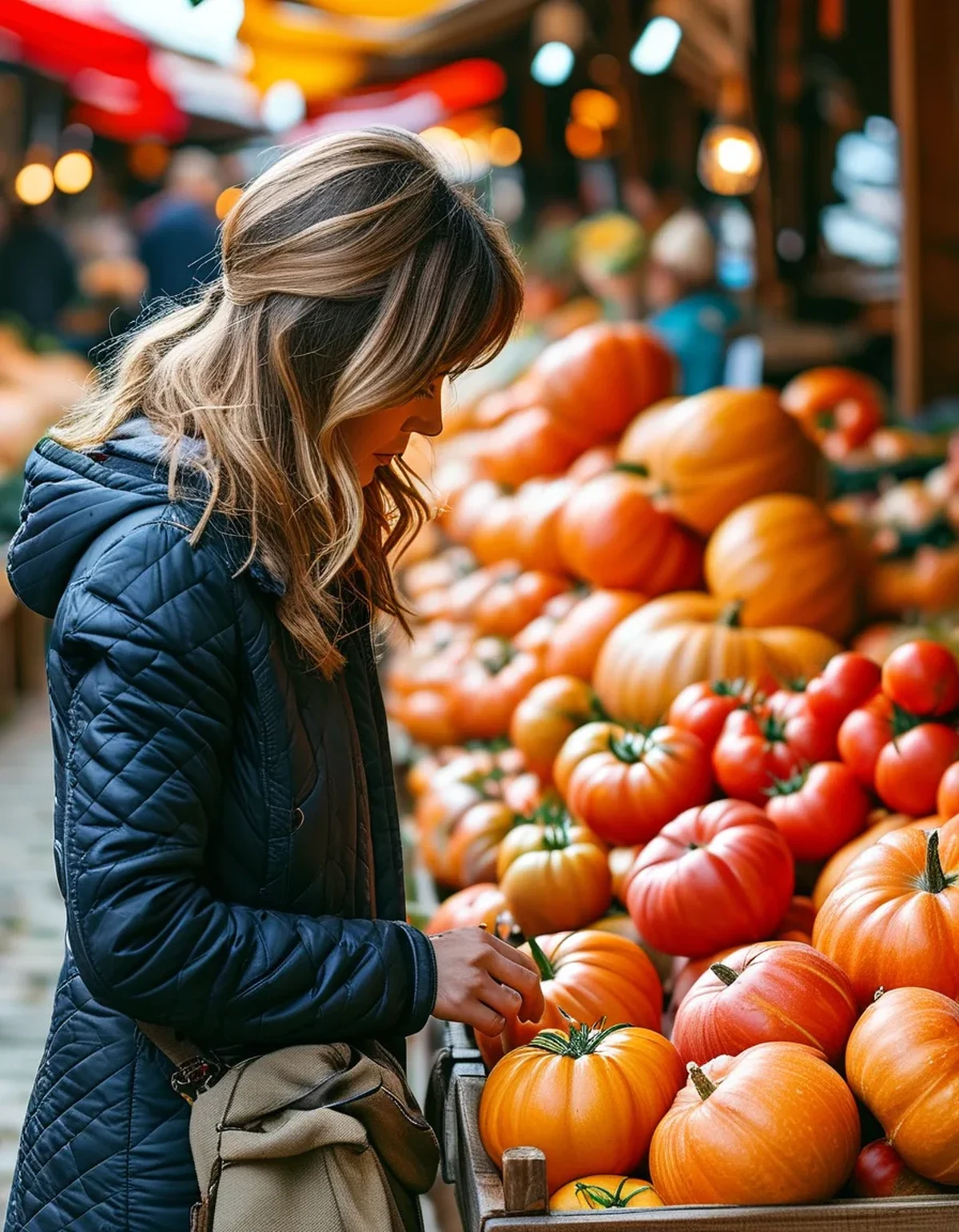
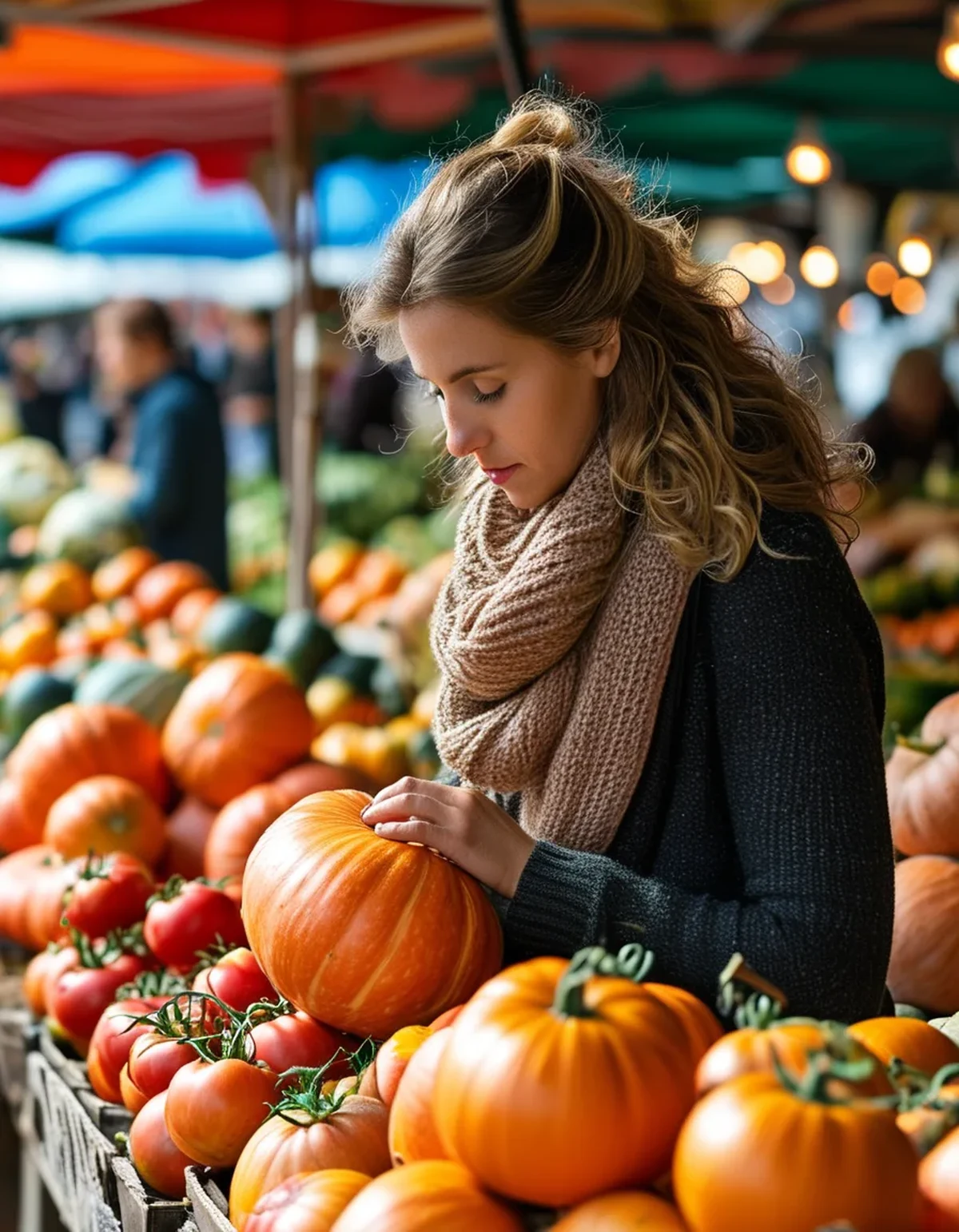
Tomatoes, by the case. This is the single best value at the market this month. Ask for seconds or canning tomatoes - blemished, oddly shaped, or overripe fruit sold at a steep discount, which is exactly what you want for sauce or roasting. A case that costs a fraction of per-pound pricing turns into a freezer full of sauce in an afternoon.
Peppers, especially sweet ones. Roast, peel, and freeze in oil, or freeze raw and sliced. They lose texture but keep flavour completely, which is fine for everything you would cook them in.
Corn. The last two weeks of local corn are worth buying twenty ears of. Cut the kernels off raw and freeze flat in bags - it takes twenty minutes and the result is dramatically better than anything you will buy in February.
Basil and soft herbs. They will be killed by the first cold night, and growers know it. Buy big bunches cheap, blend with oil, freeze in ice cube trays.
Stone fruit, if any remains. Late peaches and plums are usually the last week or two. Sliced and frozen on a tray, they are better than anything available for the next ten months.
And a bulk-buying rule that matters: ask the seller directly. “Do you have seconds?” and “What are you trying to move today?” are the two most useful sentences at any market, and almost nobody says them. Sellers routinely have a box under the table that never makes it onto the display.
What should you wait on?
Four things that are currently overpriced and will improve.
Winter squash. The first butternuts and acorns of September are usually harvested slightly early and have not been cured. Cured squash - left in a warm dry place for a week or two after harvest - develops considerably more sweetness and stores much longer. Squash bought in late September or October is both cheaper and better than squash bought this week, which is the clearest wait-and-save on the market.
Apples. Early varieties are available now but the main local harvest, and the varieties worth caring about, arrive over the following month. Early apples also store poorly. If you want apples for eating this week, fine; if you want apples for a bowl that lasts, wait.
Brassicas. Kale, cabbage, sprouts, and broccoli all improve after a frost - cold triggers the plants to convert starches to sugars as an antifreeze response, which genuinely changes the flavour. Pre-frost brassicas are noticeably more bitter. This is a real and reliable effect.
Root vegetables generally. Carrots, parsnips, and beets get sweeter later in the season for the same reason, and they store for months, so there is no urgency at all.
The general principle: buy the things that are about to vanish, wait on the things that are about to get better and cheaper. The market rewards this pattern more heavily in September than in any other month.
How do you tell what is actually local this week?
Because early September is when the line gets blurriest.
Watch for things that cannot be local right now. If a stall has perfect uniform tomatoes at the same time as everyone else’s are getting misshapen and cracked, or has produce from a completely different climate, ask where it was grown. Most markets have rules about this and most sellers answer honestly if asked directly.
Ask a specific question rather than a general one. “Is this local?” gets a yes. “Which farm, and how far away?” gets an actual answer. Growers who grew it are usually delighted to talk about it; resellers become vague.
Look at the damage. Genuinely local, recently picked produce has field marks - a scuff, a bit of soil, uneven ripening within a box. Uniform, unblemished, waxed produce has been through a supply chain.
Check the timing against your own climate. If it is the first week of September and someone has an abundant crop of something that where you live is a July crop or an October crop, that is a flag worth asking about.
And notice who is on the stall. At most farmers markets the person who grew it is standing there, and they will tell you what was picked yesterday and what has been in a cold store for a week. The single most useful market question remains: “What did you pick this morning?”
What is worth cooking this week specifically?
The overlap week has one genuine culinary advantage that no other week has.
Summer and autumn ingredients on the same plate. Roasted late tomatoes with the first squash. Corn with early apple in a salad. Peppers with the first brassicas. These combinations are available for about two weeks a year and they are genuinely good, because the flavour profiles of late summer and early autumn produce complement each other in a way that peak-summer and mid-winter produce cannot.
Big-batch tomato work. This is the week for it. Roasted tomato sauce, passata, oven-dried tomatoes in oil. A single afternoon this week produces something you use until March, and the raw material costs less this week than any other week of the year.
The last of the no-cook meals. Tomato, basil, good bread, and olive oil requires nothing from a stove and will not be worth making in three weeks. Make it three more times.
First-of-season roasting. The oven has been off since June for most people. The first squash roast of the year is a genuinely pleasant thing and the kitchen warmth is welcome for the first time in months.
And a practical note on storage: do not refrigerate tomatoes, and do not refrigerate the first squash. Tomatoes lose flavour compounds below about 12C and the damage is not reversible. Squash wants a cool dry place, not a cold one - and it wants a couple of weeks of curing before you use it, which is another reason to buy it later.
FAQ: September Farmers Market Questions, Answered
What is in season at the farmers market in early September?
The overlap of two seasons - the last and cheapest tomatoes, peppers, corn, aubergines, beans, and stone fruit, alongside the first and most expensive winter squash, early apples, and brassicas. It is the widest variety week of the entire year.
What is the best value at a farmers market in September?
Case-lot tomatoes, particularly seconds sold for canning, and end-of-season corn and peppers. Growers are trying to clear crops that have a hard deadline, and asking directly whether they have seconds or anything they are trying to move often gets you a price that never appears on the display.
Should I buy winter squash in early September?
Usually not. Early squash is often harvested before it has been cured, which means less sweetness and much shorter storage life. Waiting two to four weeks gets you better flavour at a lower price, which is the clearest wait-and-save decision on the market this month.
Why do vegetables taste better after a frost?
Cold triggers plants like kale, cabbage, sprouts, carrots, and parsnips to convert stored starches into sugars as a natural antifreeze response. The effect is genuine and noticeable, which is why brassicas and roots bought before the first frost taste more bitter than the same crop three weeks later.
TL;DR:
- Early September is the two-week overlap of summer’s end and autumn’s start.
- Buy departing crops in bulk - tomatoes, peppers, corn, basil, stone fruit - and preserve them.
- Wait on squash, apples, and brassicas; they get cheaper and genuinely better.
- Ask two questions: “Do you have seconds?” and “What did you pick this morning?”
- One afternoon of tomato work this week feeds you until March.
The stalls will look almost identical next Saturday. About a third of what is on them will not be, and the good deal will be gone.
Keep Reading
This article is for general informational purposes only and is not medical advice. Always consult a qualified health professional for guidance specific to you.