Farmers Market Questions for the End of Summer
Quick Answer: Late August is the single best market moment of the year — tomatoes, corn, stone fruit, peppers, and summer squash are all at peak simultaneously, which happens in no other month. It is also the last reliable window for several of them. Buy the peak items in quantity and preserve them, buy the transitional items sparingly, and start looking for the first autumn arrivals at the back of stalls.
Here are the questions worth answering before this weekend’s market.
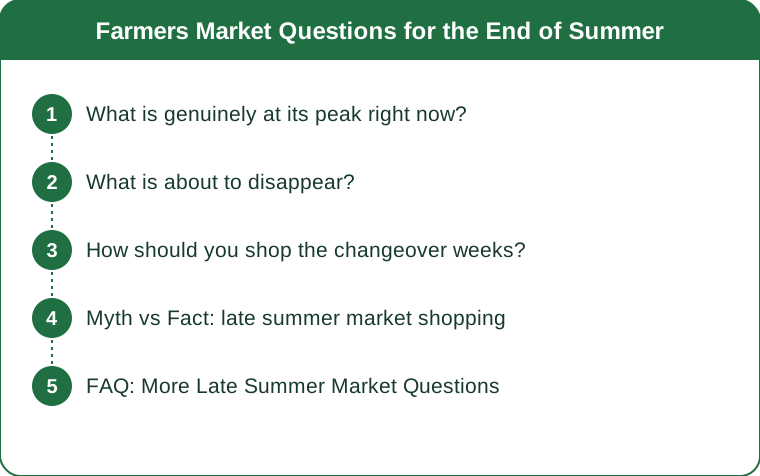
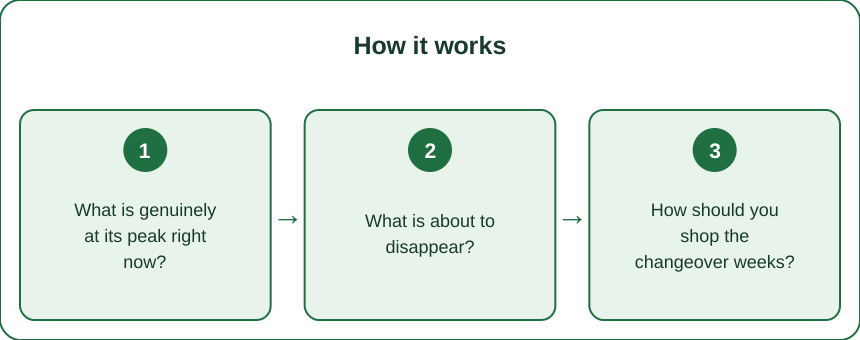
What is genuinely at its peak right now?
A short, specific list, and it is the best it will be all year.
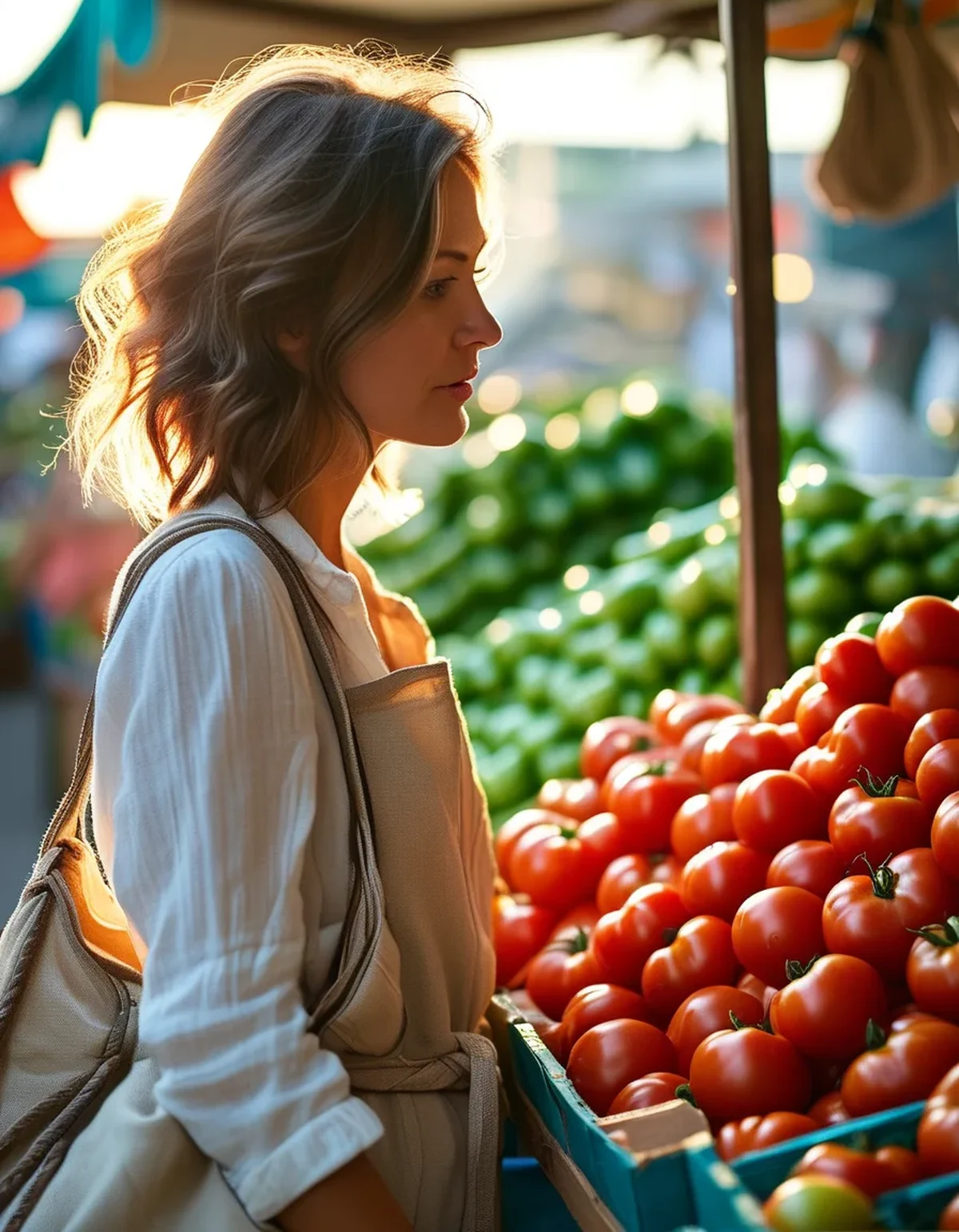
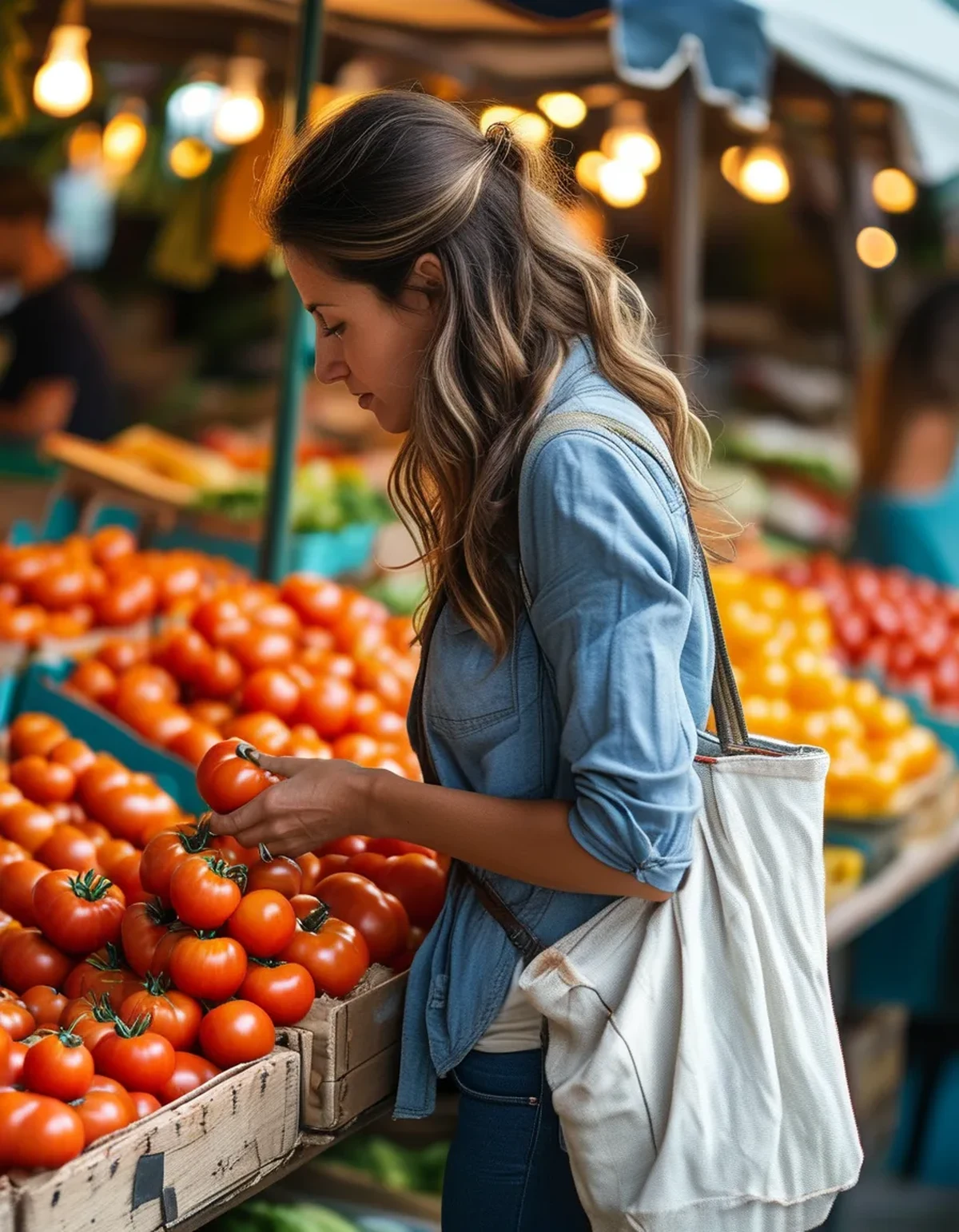
Tomatoes. The absolute peak, and the gap between an August market tomato and anything available in October is enormous. This is the week to buy far more than seems sensible.
Sweet corn. At its best now and declining fast. Sugar converts to starch within hours of picking, so market corn bought the morning it was picked is a genuinely different product from supermarket corn.
Stone fruit. Peaches, nectarines, and plums are at their peak through late August. Late-season peach varieties are often the best of the year, and they end abruptly.
Peppers and chillies. Just hitting their stride, and they continue into September.
Summer squash and courgette. Abundant and cheap, which makes this the moment to buy for preserving rather than for the week.
Melons. Peak now, and they are one of the items where market quality most exceeds supermarket quality.
Basil, and soft herbs generally. At their most abundant and their cheapest, and the first cold night ends basil entirely.
What is about to disappear?
Knowing this changes how much you buy.
Basil goes first, and it goes suddenly. It is killed by the first genuinely cold night, which in the northern US can arrive in mid-September. If you want pesto in the freezer, the window is now.
Corn ends within a few weeks in most regions. Late corn is still good; it is not what August corn was.
Tomatoes decline through September and end with the first frost. Late-September tomatoes are usable for cooking and are not the same for eating raw.
Stone fruit ends fast. Once the late peach varieties finish, there is no gradual decline — the stalls simply stop having them.
Berries are largely finished except for late raspberries, which often have a good autumn flush.
What is arriving: early apples, the first winter squash, leeks, late beans, and the first proper brassicas. These are worth buying small quantities of now and large quantities in a month, because the early versions are usually not yet at their best and the price reflects novelty rather than quality.
How should you shop the changeover weeks?
Differently from the rest of the year, because the calculus changes.
Buy peak items in bulk and preserve. This is the whole strategy for late August. Tomatoes to roast and freeze, basil to blend into pesto and freeze in an ice cube tray, peppers to roast, peaches to freeze in slices, corn to strip and freeze. Two hours of work in late August produces months of ingredients that are simply not purchasable in January.
Ask the grower directly how long they have left. Market stallholders will tell you, and it is the single most useful question available. Two more weeks of tomatoes means buy now; six more weeks means you can spread it out.
Go late for preserving quantities. The last hour of a market is when growers discount and when they are most willing to sell a full case. Seconds and slightly-blemished produce are perfect for cooking and preserving and are often half price.
Go early for the best specimens. The opposite strategy for the things you want to eat raw. The best tomatoes and melons are gone in the first hour.
Buy the new arrivals small. The first winter squash and the first apples are expensive and not yet at their best. Buy one to try; buy the crate in October.
Myth vs Fact: late summer market shopping
Myth: Market produce is always more expensive. Fact: At the seasonal peak, it is frequently cheaper than the supermarket, particularly for the things in glut — right now that is courgette, tomatoes, and peppers. The price premium at a market is highest for out-of-season and specialty items and lowest at peak.
Myth: Ugly produce is lower quality. Fact: For tomatoes and stone fruit, the opposite is often true — irregular shapes and split skins usually indicate ripeness and varietal character rather than defect. The uniform ones are frequently the ones bred for shipping.
Myth: You should shop at the start for the best selection. Fact: Depends what you want. Best individual specimens, yes, go early. Best value and full cases for preserving, go in the last hour. Doing both means two trips or a decision about what this week is for.
Myth: Everything at a farmers market was grown by the seller. Fact: Rules vary considerably by market. Some are producer-only; many permit resale. Asking where something was grown is entirely normal and the answer tells you a lot about the stall.
Myth: You need to use it all within a few days. Fact: Correct storage extends most of it substantially — and tomatoes should never go in the fridge, which is the single most common storage error and it destroys both texture and flavour.
FAQ: More Late Summer Market Questions
What is the best thing to freeze from this week’s market?
Roasted tomatoes and basil, in that order. Roasted tomatoes freeze beautifully and become the base of a dozen winter meals. Basil blended with oil and frozen in cubes keeps almost all of its character, where dried basil keeps almost none.
How do I stop buying more than I use?
Decide the preserving plan before you go, and buy the eating produce for three days rather than seven. Most market waste is fresh produce bought with enthusiasm and no plan, and the fix is deciding on the way rather than at the stall.
Is it worth going every week through autumn?
Yes, and the character changes. Autumn markets are less about abundance and more about storage crops — squash, apples, root vegetables, brassicas — which keep for weeks and make a single larger trip more practical than a weekly one. The weekly rhythm suits summer; a fortnightly one often suits autumn better.
TL;DR:
- Late August is the only moment when tomatoes, corn, stone fruit, peppers, squash, melons, and basil all peak at once.
- Basil ends with the first cold night, corn declines within weeks, and stone fruit stops abruptly rather than tapering.
- Buy peak items in bulk and preserve — roasted tomatoes and frozen basil cubes are the two highest-value jobs of the year.
- Go early for the best individual specimens, go in the last hour for cases and discounted seconds.
- Buy the first winter squash and apples in small quantities; they get better and cheaper in a month.
Ask the grower how many weeks they have left. It is one question and it tells you exactly how much to buy — and never refrigerate the tomatoes.
Keep Reading
This article is for general informational purposes only and is not medical advice. Always consult a qualified health professional for guidance specific to you.