Peak Tomato: A Field Guide to August's Main Event
Quick Answer: Peak tomato season runs roughly six weeks from late July through early September. Buy the ugly ones — cracked shoulders and odd lobes signal heirloom varieties that traded shelf life for flavor — and choose by smell at the stem end. Never refrigerate them: cold below about 55°F permanently deadens the aroma compounds. Store stem-side down on the counter and eat within 3 to 5 days.
There are two tomato seasons. There’s the eleven months of uniformly red spheres that taste faintly of water, and then there’s the season, which is happening right now and will be over sooner than you’d like.
If you’ve only ever had supermarket tomatoes, the difference isn’t subtle. It’s the difference between a photograph of a thing and the thing.
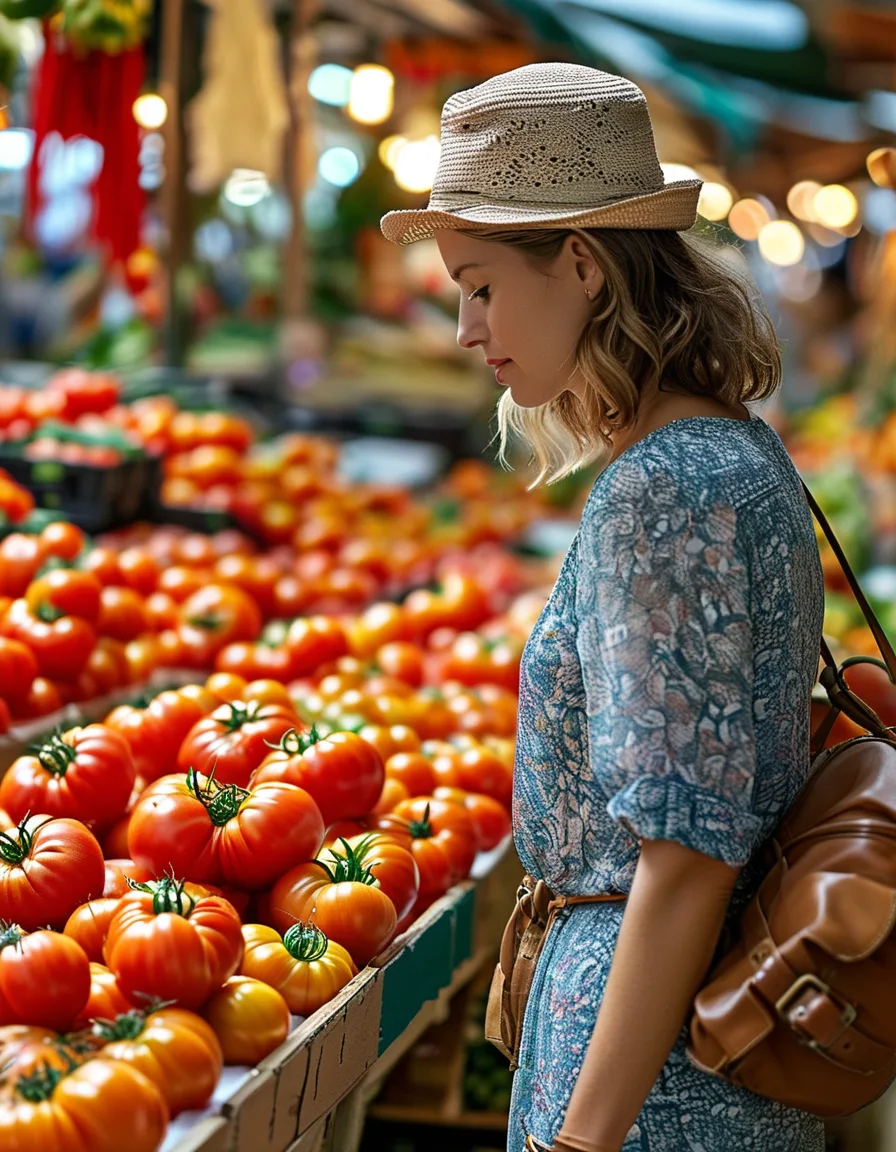

How Do You Pick a Good Tomato at the Market?
Counterintuitively, look for the ones that would never survive a grocery shelf.
Cracked shoulders and odd lobes are a good sign. Those splits happen when a tomato grows fast after rain — a variety bred for appearance would have been picked before that could happen. Heirlooms trade shelf life and uniformity for flavor, which is precisely the trade supermarkets can’t make.
Buy by smell, not by color. Sniff the stem end. A ripe tomato announces itself with a green, slightly peppery aroma; a tomato with no smell will have no taste. This one test beats every visual cue.
Check the weight. A good tomato feels heavier than it looks — that’s density of flesh rather than water and air.
And give it the gentlest possible press. You want yielding, not soft. Firm-with-give is peak; any actual squish means eat it today.
Colors run from green-striped to deep purple-black to orange, and all of them can be perfectly ripe. Judging heirloom ripeness by redness is the fastest way to buy a bad tomato.
Why Should You Never Refrigerate a Tomato?
Because cold does permanent damage to the flavor, and this is genuinely the most important thing on this page.
Below roughly 55°F, the enzymes that produce a tomato’s aroma compounds shut down — and they don’t fully restart when the tomato warms back up. You also get mealy texture as cell walls break down in the cold.
So: counter storage, stem-side down, out of direct sunlight. Stem-side down slows moisture loss through the scar and keeps them good a day or two longer.
The one exception is a tomato you’ve already cut. Refrigerate that, cut-side down on a plate, and use it within a day — by then the flavor damage is a smaller loss than the alternative.

What Are the Best Ways to Eat Peak Tomatoes?
Five, in roughly ascending order of effort and descending order of how much you need a recipe.
- Thick slabs with flaky salt, eaten standing at the counter. Salt 10 minutes ahead if you can — it draws out juice and concentrates flavor.
- The tomato sandwich. Good bread, real mayonnaise, salt, black pepper, and the confidence to put nothing else on it.
- Pan con tomate. Grate a halved tomato over toasted bread rubbed with garlic, then olive oil and salt. Spain’s best five-minute idea.
- Caprese, but only with actually ripe tomatoes. With a mediocre tomato it’s just cheese and a leaf.
- Raw sauce over hot pasta. Chop tomatoes, add torn basil, garlic, olive oil, and salt; let it sit 30 minutes, then toss with hot pasta. The heat of the pasta does all the cooking required.
Note what these have in common: almost no cooking, almost no ingredients. Peak tomato season is the one time of year where doing less is unambiguously the better technique.

Myth vs Fact: Tomato Edition
Myth: Tomatoes should be stored in the fridge like other produce. Fact: Cold permanently damages both flavor and texture. Counter storage, stem-side down, is correct for any uncut tomato.
Myth: Redder means riper. Fact: Plenty of heirlooms are ripe while green, purple, orange, or striped. Smell and gentle give are far more reliable indicators than color.
Myth: Cracked or misshapen tomatoes are damaged goods. Fact: They’re usually the flavorful varieties. Genuine damage looks like soft brown spots or broken skin with weeping — cracks at the shoulder are cosmetic.
Myth: You need to peel and seed tomatoes for a good sauce. Fact: For a raw or quick sauce, absolutely not. The seeds and gel carry a lot of the savory flavor, and peeling matters mainly for long-cooked smooth sauces.
How Do You Make the Season Last?
Two moves, both worth the hour.
Roast the glut into freezer sauce. Halve the tomatoes, toss with olive oil and salt, and roast at 300°F for 2 to 3 hours until collapsed and slightly caramelized. Blend or leave chunky, cool, and freeze flat in bags. Opening one in February is a genuinely emotional experience.
Deal with the end-of-season green ones. The stragglers that won’t ripen before the weather turns make excellent chutney, or slice and fry them in cornmeal.
Peak season is short — roughly six weeks in most of the US, and shorter if the summer runs wet. Buy more than you think you need at least once.
Mini FAQ
How long do fresh tomatoes last on the counter?
Three to five days for a fully ripe one, longer for anything still firm. Stem-side down and out of direct sun buys you an extra day or two.
What are heirloom tomatoes exactly?
Open-pollinated varieties grown from saved seed for generations, rather than hybrids bred for uniform shipping. They’re inconsistent in appearance and shorter-lived — and that’s the trade that gives you the flavor.
When is tomato season in the US?
Broadly late July through early September, peaking in August in most regions. Southern growing areas start earlier; northern ones can run into late September in a warm year.
TL;DR:
- Buy the ugly ones and choose by smell at the stem end, not by redness.
- Never refrigerate uncut tomatoes — cold permanently kills the aroma compounds.
- Store stem-side down on the counter, out of direct sun, and eat within 3 to 5 days.
- Best preparations involve almost no cooking: salt, bread, olive oil, basil.
- Roast the surplus into freezer sauce; the February version of you will be grateful.
Six weeks a year, tomatoes are one of the best things you can eat. Spend the season like it’s the annual event it is.
Keep Reading
This article is for general informational purposes only and is not medical advice. Always consult a qualified health professional for guidance specific to you.