From Tote to Table: Meal-Planning Around Your Market Haul
Quick Answer: Reverse meal planning means shopping the farmers market first and building your week around whatever you bought, instead of planning meals and then shopping for them. Sort your haul by how fast it spoils, slot it into a few flexible “formula” meals, and preserve anything you won’t get to in time.
Those heirloom tomatoes made the decision for you before you even got home. So did the corn, and honestly so did the peaches. Now the only question left is how to turn a tote bag of impulse buys into an actual week of dinners.
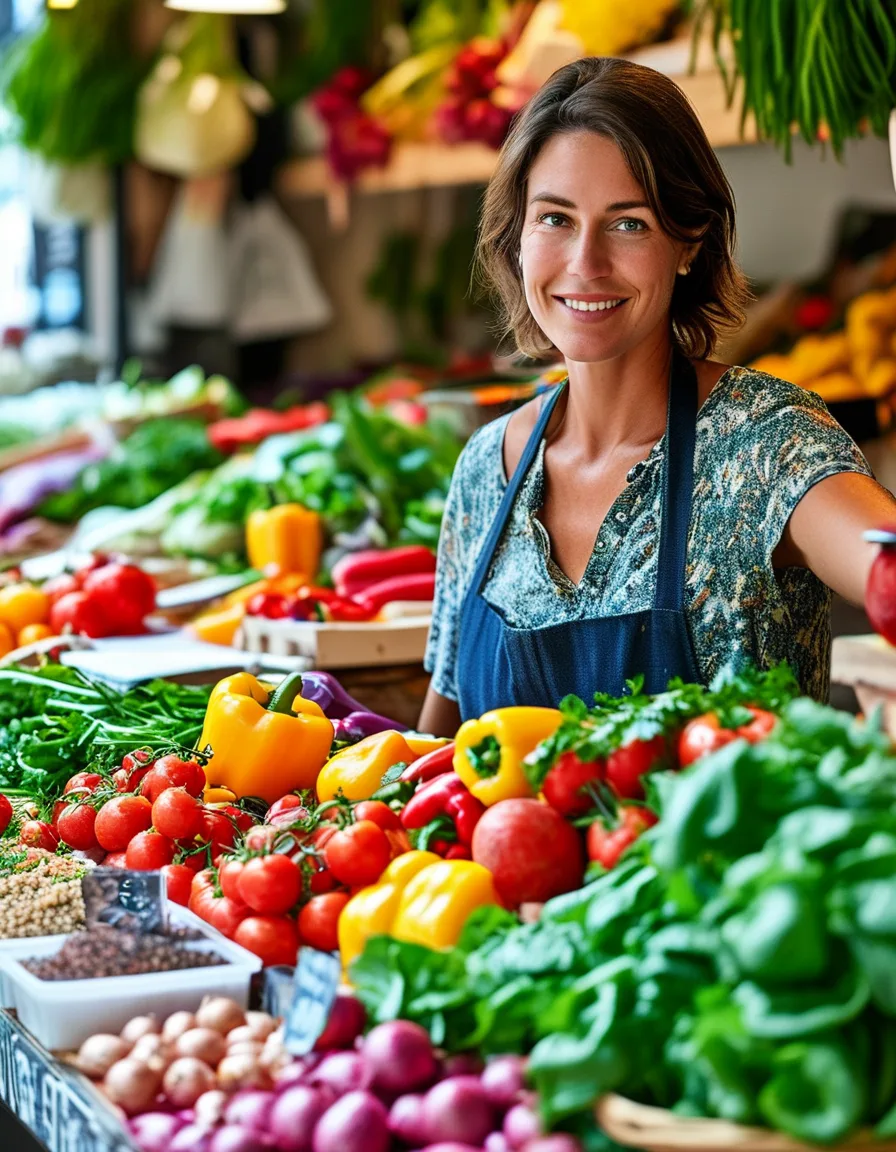
What’s the difference between regular meal planning and market meal planning?
Regular meal planning goes list-first: you decide what you’re eating, then shop for exactly those ingredients. Market shopping runs the opposite direction — you buy what looks incredible first, then figure out dinner around it. That’s not disorganized, it’s just a different order of operations, and once you get used to it, it’s arguably the more honest one. You’re not fighting your own eyes at the market stall, you’re just moving the planning step to after checkout instead of before.
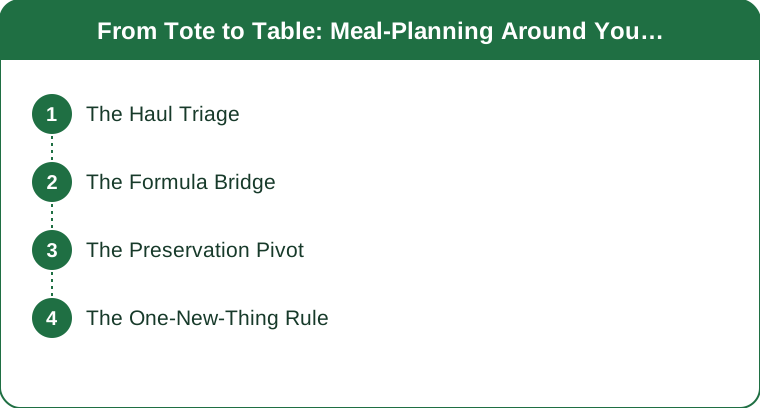
How do you sort a market haul when you get home?
The first ten minutes home matter more than anything else you’ll do with that produce all week. Sort everything by urgency into three rough piles:
- Eat-first (48 hours or so): berries, corn, lettuce, anything leafy or delicate
- Mid-week (3-5 days): tomatoes, zucchini, green beans, most summer squash
- Keepers (a week or more): potatoes, onions, cabbage, winter squash, hardy roots
The fridge order becomes the meal order — whatever’s in the eat-first pile gets cooked into the next two dinners, no exceptions, no “I’ll get to it.” Everything else has more runway, so it can wait its turn.
What are “formula meals” and why do they work with a haul?
This is the part that actually makes reverse planning doable on a weeknight. Instead of planning specific dishes, you keep three or four loose formulas in your back pocket that any vegetable can slot into:
- Whatever-vegetable pasta (sauté, toss with pasta, cheese, done)
- Market-haul grain bowls (grain + roasted veg + protein + sauce)
- Clean-out-the-tote frittatas (eggs plus literally anything)
- Grilled everything with good bread on the side
The produce is the star and the formula just flexes around it — you’re not hunting for a recipe that calls for exactly one kohlrabi and two ears of corn, you’re plugging whatever you have into a shape that already works.

What do you do with produce you won’t use in time?
Peak season means abundance, and abundance means something’s going to outpace your appetite eventually. That’s a scheduling problem, not a failure, and it has genuinely delicious solutions. Berries that won’t make it to tomorrow get frozen flat on a tray so they don’t clump. Extra herbs turn into little jarred bouquets in water on the counter, or get chopped into oil and frozen in cubes. Tomatoes past their prime roast down into a sauce that freezes beautifully and tastes like a favor to your future self. None of this requires special equipment — a freezer bag and five spare minutes covers most of it.
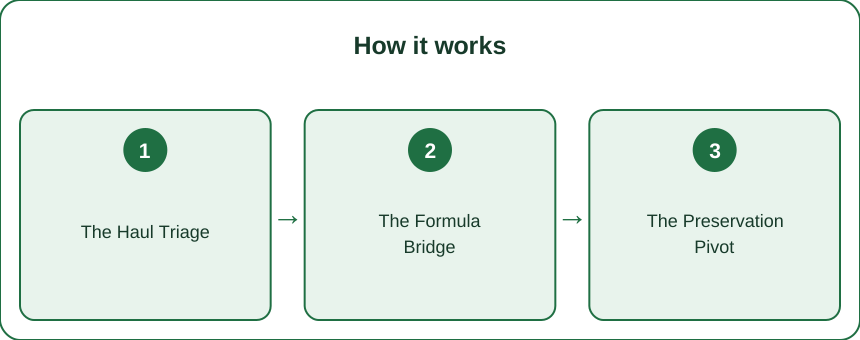
Should you try new produce every week?
It’s worth building in one small experiment per haul. Pick the stranger in the pile — the kohlrabi, the garlic scapes, the mystery squash nobody at the stall could quite explain — and commit to researching it over coffee and cooking it by Thursday. It sounds like a small habit, but a year of one-new-things adds up fast, and eventually you’re the person your friends text with vegetable questions. That’s a good problem to have.
Myth vs Fact: Reverse Meal Planning
Myth: You need a recipe in mind before you shop. Fact: the opposite is true at a market — showing up with a rigid list is how you end up disappointed by whatever wasn’t as good that week. Buy first, plan second.
Myth: Unplanned produce always goes to waste. Fact: with a quick triage system, almost nothing goes to waste — the haul just needs a home within its shelf life, and formula meals give it one fast.
Myth: Preserving food is a big project. Fact: freezing berries flat or roasting tomatoes into sauce takes minutes, not a whole Saturday, and both save real money over the following weeks.
FAQ: Meal Planning Around a Farmers Market Haul
How much produce should I buy at the farmers market?
Buy roughly what you can realistically cook or preserve within a week, leaning slightly toward the eat-first items you’re most excited about. If you’re new to a stall, start smaller — you can always go back next week, and overbuying delicate produce is the fastest way to waste money.
Can I still meal plan a week ahead with market produce?
Yes, but plan formulas rather than fixed dishes. Decide you’re doing “grain bowls twice, a frittata, and a pasta night” before you shop, then let the actual haul decide which vegetables fill those slots once you’re home.
What if I don’t use everything before it spoils?
Freeze what you can before it turns — berries flat on a tray, herbs in oil cubes, extra tomatoes as roasted sauce. A few minutes of preservation now turns a near-miss into a head start on next week’s cooking.
TL;DR:
- Market shopping works backward: buy first, plan meals around the haul second
- Sort produce into eat-first, mid-week, and keeper piles the moment you get home
- Lean on flexible formula meals (pasta, bowls, frittatas, grilled everything) instead of fixed recipes
- Freeze or preserve anything that won’t get used in time — it takes minutes, not hours
- Try one unfamiliar item per haul to keep your market habit growing
Keep Reading
This article is for general informational purposes only and is not medical advice. Always consult a qualified health professional for guidance specific to you.