Farmers Market on a Budget: Eating Local Without the Premium Guilt
The farmers market carries a premium reputation that’s half-earned and half-myth — some stalls charge boutique prices, others beat the supermarket, and timing changes everything. The budget strategy: when to go, what to buy and the honest math per crop.

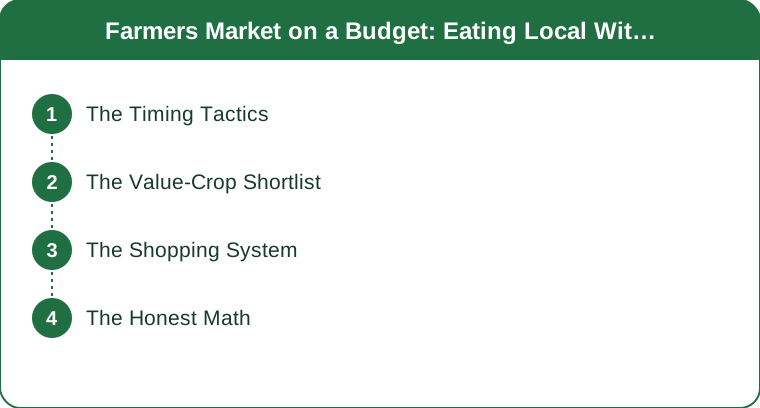
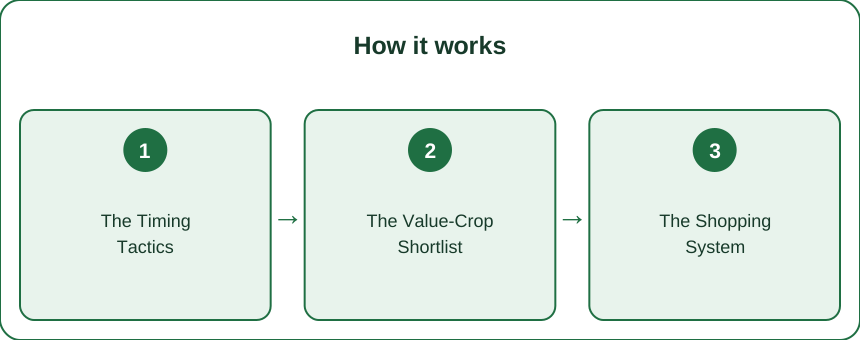
The Timing Tactics
When the prices move: the end-of-market window (the final hour is discount hour — vendors would rather sell than repack; the polite ‘any end-of-day deals?’ unlocks what’s unlabeled), the peak-season arithmetic (mid-summer tomato glut prices crash below supermarket — buying what’s abundant is the whole strategy; the seasonal flood is the budget’s friend), the weather-day advantage (the drizzly market morning has fewer customers and softer prices — the rain-jacket shopper’s edge), and the relationship dividend (the weekly regular gets the baker’s dozen and the held-aside seconds — loyalty is a discount program vendors run informally).
The Value-Crop Shortlist
Where the market beats the store: the in-season flood crops (tomatoes, zucchini, greens, stone fruit at peak — the market’s price-and-quality double win; the seconds-and-uglies bins double it again), the herb economics (the market herb bunch dwarfs the supermarket plastic clamshell at similar prices — the single best value swap in the building), the eggs-and-honey tier (competitive with premium supermarket versions and categorically better), and the skip-list honesty (out-of-season anything, the artisan-jam-and-pastry tier — delightful, budgeted as treats not groceries; the market premium lives in the processed stalls, not the produce tables).

The Shopping System
The budget-protecting protocol: the lap-before-buying rule (the full market walk before the first purchase — the same tomatoes vary stall to stall by half; the survey lap is five minutes that prices the room), the cash-envelope trick (the fixed market budget in cash — the tap-to-pay market splurge is how twenty becomes sixty; the envelope makes the limit physical), the list-plus-flex structure (the planned staples plus one what’s-good-today slot — the market rewards flexibility; the flood crop becomes the week’s meal plan), and the whole-use commitment (the beet greens and the herb stems used — market produce arrives complete; using all of it is where the value math lands).
The Honest Math
The market-vs-supermarket verdict: the like-for-like comparison (peak-season market produce versus supermarket ORGANIC equivalents runs competitive-to-cheaper — the fair comparison; versus conventional imports it often loses on sticker and wins on quality-per-dollar), the waste variable (market produce picked ripe lasts differently — some shorter, eaten faster; the planning that prevents the crisper-drawer compost fee), the meal-plan integration (the market haul driving the week’s menu — the budget-batch system fed by the flood crop; the haul without a plan is expensive decoration), and the values line-item (the local-farmer premium where it exists is a chosen spend — named honestly in the budget, it’s a vote, not a leak; the strategy’s job is making the vote affordable). Local eating budgets fine — with a watch, a lap and an envelope.
Last hour, flood crops, survey lap first, cash envelope. The market beats its premium reputation when you shop its rhythms — buy the glut, befriend the stall, use it all.
Keep Reading
This article is for general informational purposes only and is not medical advice. Always consult a qualified health professional for guidance specific to you.