Peak Tomato Week: How to Handle the Late-August Glut at the Market
Quick Answer: Late August is the one window when every tomato type peaks simultaneously - which is why prices drop, seconds boxes appear, and growers start dealing. Buy in three ripeness stages so nothing rots on schedule, store ripe ones on the counter stem-side down and only refrigerate at full ripeness, and plan one batch-cooking hour for the surplus: a slow-roasted tray or a simple crushed sauce, both of which freeze flat and turn February pasta into a time machine. The seconds box is the single best deal at the entire market right now.
There is a moment every year - it is now - when the tomato tables stop being precious. The pyramids get taller, the ugly boxes come out from under the table, and the farmer starts saying things like take the whole flat for ten. This is not a sales tactic. It is a harvest wave breaking, and the shoppers who know how to meet it eat better than anyone for the next six months.

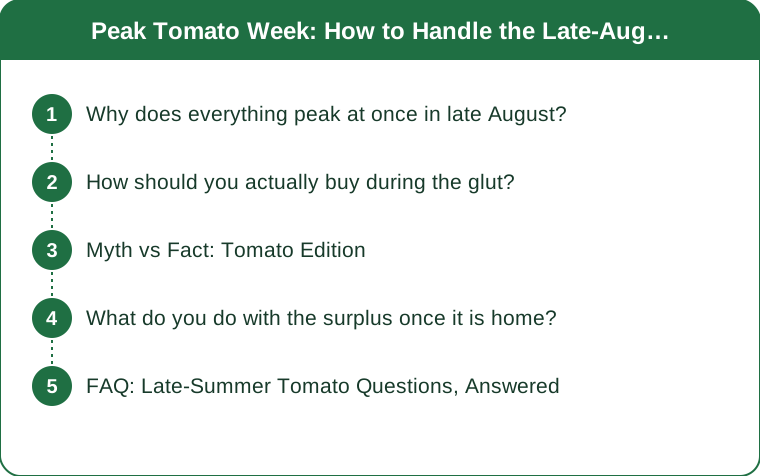
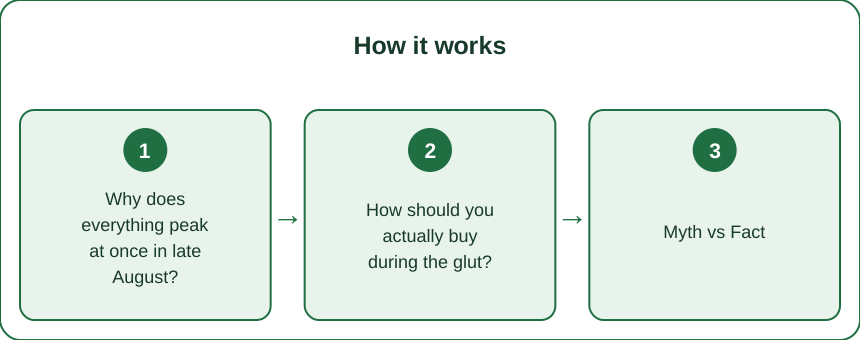
Why does everything peak at once in late August?
Because of planting math that was locked in back in May.
Field tomatoes are on a fixed clock. Most varieties need 70 to 90 frost-free days from transplant, and growers in the northern half of the country transplant within the same few-week window after last frost. Count forward and the entire region’s plantings crest together - mid-August through early September - regardless of anyone’s sales plan.
Heat accelerates the pile-up. August warmth ripens fruit faster than picking schedules anticipate, and a hot week can push three planned harvest days into one. Vines also set fruit in flushes, so a wave that began as staggered plantings arrives compressed. The result on the table: more fruit than the stand’s regulars can absorb, which is where the deals begin.
Every category hits together. Early August belongs to cherry tomatoes and the first slicers. By late August the beefsteaks, the paste varieties, and the heirlooms all arrive at once - the only weeks of the year you can buy sauce tomatoes, sandwich tomatoes, and showpiece heirlooms from the same table at peak. That simultaneity is the actual meaning of peak season, and it lasts roughly until the first cool nights slow the vines.
And the economics tilt toward you. A dead-ripe tomato has a 48-hour sales window; growers would rather move volume cheap than compost it. Hence seconds boxes - split, scarred, or odd-shaped fruit at a fraction of the price - and end-of-market flexibility on whole flats. None of the flaws matter to a sauce pot. The glut is a scheduled event, and arriving with a plan is the whole game.
How should you actually buy during the glut?
Stage your ripeness, match the type to the job, and befriend the ugly box.
Buy in three stages so the kitchen never floods. The classic glut mistake is eight gorgeous dead-ripe tomatoes that all expire on Wednesday. Instead: a third fully ripe - deeply colored, fragrant at the stem, yielding slightly - for the next two days; a third just short of ripe for midweek; a third firm and barely blushing for the weekend. One bag, a built-in seven-day pipeline.
Match the variety to the use, not the beauty contest.
- Slicers and beefsteaks: sandwiches, burgers, and the tomato-salt-mayo lunch. Big, juicy, structurally lazy - eat, do not cook.
- Heirlooms: the flavor peak. Eat raw, sliced, with nothing but salt and maybe good oil. Cooking an expensive heirloom mostly cooks away what you paid for.
- Paste types (Roma, San Marzano-style): dense flesh, few seeds, low water - the sauce and roasting engine, usually the cheapest per pound at the peak.
- Cherries: snacks, salads, and - underrated - roasting whole, where they turn to candy.
Ask for the seconds box like a regular. Any splits or seconds today? is normal market language. What is in it: fruit with cracks, sunscald patches, or comedy shapes, at steep discounts. What it needs: using within a day or two, cutting away the flaws, and a destination pot. For sauce, the seconds box is not the budget option - it is the correct option.
And taste before committing to volume. Growers offer samples at peak because they are proud and because the fruit closes the sale. Two stalls’ tomatoes can be different foods; the fifty cents more per pound at the better stall is the cheapest flavor upgrade in the building.

Myth vs Fact: Tomato Edition
Myth: Never, ever refrigerate a tomato. Fact: Never refrigerate an underripe one - cold halts ripening and dulls flavor development, which is the real crime the rule is about. A fully ripe tomato you cannot eat today loses far less in the fridge than it loses rotting on the counter. Refrigerate at peak if you must, and give it thirty minutes at room temperature before eating to wake the aromas back up.
Myth: Red means ripe. Fact: Only for red varieties. Heirlooms peak at green-striped, purple-shouldered, orange, and yellow endpoints - color tells you the variety, not the readiness. Judge by feel and smell: slight give under a gentle press, and a distinct tomato-leaf fragrance at the stem scar. A ripe tomato announces itself to your nose.
Myth: Bigger tomatoes taste better. Fact: Size is variety and water, not flavor. Concentration runs the other way often as not - cherry tomatoes routinely out-flavor beefsteaks five times their size. Buy big for the sandwich architecture, not the taste.
Myth: Real sauce requires paste tomatoes only. Fact: Paste types are efficient - less water to cook off - but any tomato makes sauce with twenty extra minutes of simmering. During the glut, blended loads of seconds make some of the best sauce of the year precisely because ripeness beats variety.
Myth: Store them stem-side up, like they grow. Fact: Stem-side down. The stem scar is the moisture-loss and mold-entry point, and parking it against the counter seals it. Single layer, out of direct sun, not touching each other - a week of counter life for fruit that earned it.
What do you do with the surplus once it is home?
One batch hour, two freezer formats, and the discipline to keep it simple.
The slow-roast tray is the highest reward per minute of effort. Halve any tomatoes - types can mix freely - cut side up on a sheet pan, olive oil, salt, whole garlic cloves in the gaps. Into a 275F oven for two and a half to three hours until collapsed and edged with caramel. The house smells extraordinary, the volume shrinks by three-quarters, and the result upgrades pasta, eggs, toast, grain bowls, and sandwiches for weeks. Freeze flat in bags; use by the handful.
The crushed-pot sauce handles serious volume. Rough-chop everything including the trimmed seconds, into the widest pot, salt, a glug of oil, simmer uncovered 45 minutes to an hour, then blend or leave rustic. Skip the skins-and-seeds fussing - a blender erases both, and nobody at a February dinner has ever detected the difference. Freeze in flat bags or pint containers; label with the date, because identical red bags multiply.
The zero-cooking exits, for the days the stove loses: gazpacho in a blender in ten minutes; tomato-watermelon salad, which is peak-August’s best trick; pan con tomate - ripe tomato grated onto good toast with oil and salt; and the open-faced tomato sandwich eaten over the sink, which is arguably the entire point of the season.
And whole-freezing is the emergency valve. No time at all? Core and freeze tomatoes whole in a bag. The texture dies but the flavor keeps, the skins slip off under warm water straight from frozen, and December soup will not complain. A glut handled badly is compost; a glut handled even lazily is six months of better dinners.
The one-line budget case for all of it: peak-glut sauce costs a fraction of jarred per pint and outclasses it entirely - the cheapest weeks of the year to build the pantry are the same weeks the fruit is best. That coincidence is the whole argument for showing up with a bigger bag.
FAQ: Late-Summer Tomato Questions, Answered
When are tomatoes at their absolute peak?
Late August through early September in most of the country - the window when slicers, paste types, and heirlooms all crest simultaneously because spring transplant timing funnels every field to the same few weeks. Prices bottom out and seconds boxes appear at exactly the moment quality tops out.
Should tomatoes be stored in the fridge or on the counter?
On the counter, stem-side down, single layer, out of the sun - until fully ripe. Cold stops ripening and mutes flavor in underripe fruit, which is what the never-refrigerate rule is really about. Once dead ripe, the fridge is a legitimate two-or-three-day pause; just let the tomato warm up before eating.
What is the best way to use a lot of tomatoes fast?
One batch hour: slow-roast a tray at 275F for concentrated, freezer-ready flavor, or simmer a rough-chopped pot into simple crushed sauce and blend. Both freeze flat in bags. For zero cooking, gazpacho and grated-tomato toast absorb serious volume, and whole tomatoes can go straight into the freezer as a last resort.
Are the cheap seconds tomatoes worth buying?
For cooking, they are the best value at the market - the same ripe fruit with cracks or odd shapes at a steep discount. Cut away the flaws, use within a day or two, and pot them. For eating raw or keeping several days, pay full price for intact fruit; skin damage shortens the clock fast.
TL;DR:
- Late August is the one window when every tomato type peaks together - planting math, not marketing.
- Buy in three ripeness stages: today, midweek, weekend. The glut mistake is all-ripe-at-once.
- Counter storage, stem-side down; the fridge is only for fully ripe fruit you cannot eat in time.
- Seconds boxes are the market’s best deal - flawed fruit, full flavor, sauce-bound anyway.
- One batch hour - slow-roast tray or crushed sauce - turns the surplus into six months of upgraded dinners.
The market is quietly holding its biggest sale of the year, and the merchandise happens to be at its best. Bring the bigger bag.
Keep Reading
This article is for general informational purposes only and is not medical advice. Always consult a qualified health professional for guidance specific to you.