Farmers Market Questions About the September Changeover, Answered
Quick Answer: September is the shortest and most confusing window at a farmers market - summer produce is still there but declining in quality, autumn produce is arriving but not yet at its best, and prices move in both directions within the same three weeks. The practical rules: buy summer produce for immediate use only, buy the first autumn arrivals cautiously, and save the bulk buying for October when the storage crops are properly in.
Everything is available and nothing is quite at its peak.
That is September, and it catches people out every year.
Here are the questions that come up, answered in the order they usually get asked.
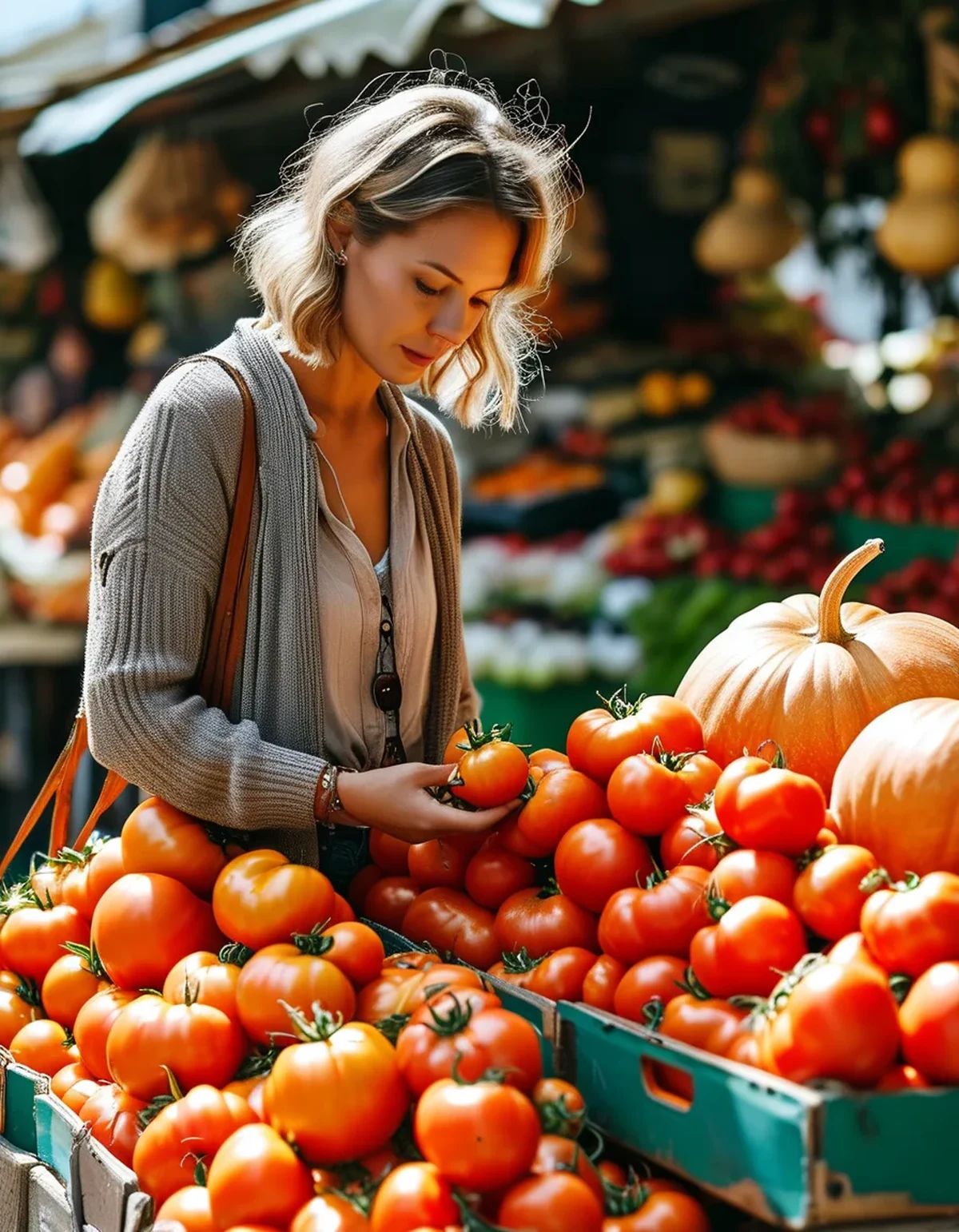
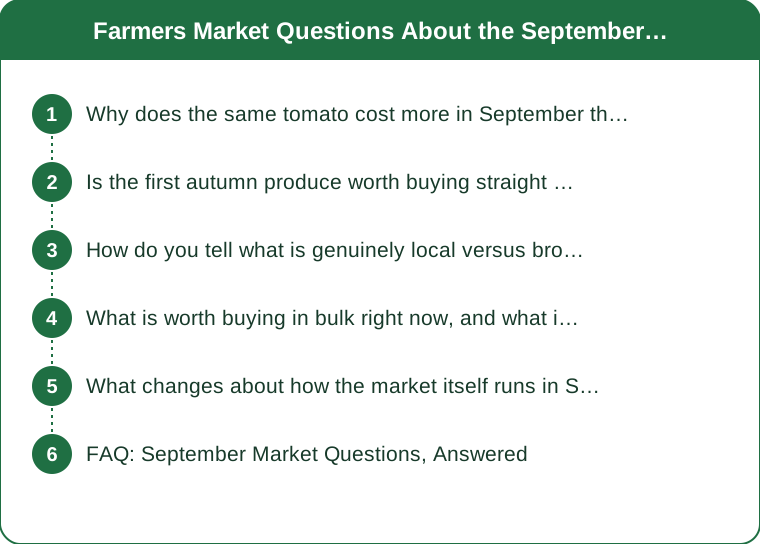
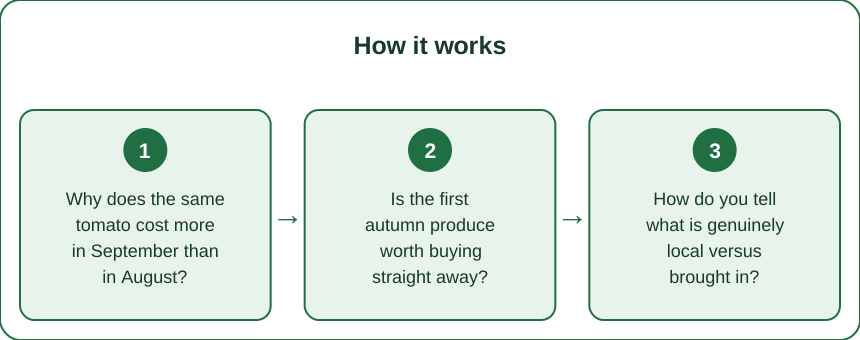
Why does the same tomato cost more in September than in August?
Because yield drops and quality becomes uneven, and both push price up.
Late-season plants produce less. As daylight shortens and nights cool, fruit development slows and total yield falls. Less supply at similar demand moves the price, and this is normal rather than opportunistic.
Quality also becomes variable, which changes what the grower can sell at full price. Late-season tomatoes are more likely to have cracking, uneven ripening and blemishes, so a smaller proportion of the crop makes it to the top-price table.
Which is why you often see two prices for the same thing in September: a full price for the good ones and a lower price for seconds. The seconds are frequently the better buy if you are cooking them, since the flavour issue is usually cosmetic.
What to actually do about it:
- Buy seconds for anything cooked, frozen or sauced. The price gap is often substantial and the difference is almost entirely appearance
- Buy full-price only for things eaten raw, where appearance and texture matter
- Ask directly whether seconds are available - many stalls have them behind the table rather than on it
A note on the flavour question: late-season tomatoes ripened in cooler weather often have less sugar development than August ones. This is a real difference and not something the price reflects, so late September is the point to switch to cooking uses rather than salads.
Is the first autumn produce worth buying straight away?
For some things yes, for others it is worth waiting two or three weeks.
### What is genuinely good on arrival
Apples and pears at first pick are excellent, and early varieties are a different product from storage varieties rather than a worse one. Buy them early and eat them soon - early apples do not store well.
Leafy greens improve immediately with cooler weather. Spinach, chard and kale all get sweeter after cool nights, so the September crop is genuinely better than the August one.
Early brassicas - broccoli, first cabbages - are at their best on arrival for the same reason.
### What is worth waiting for
Winter squash needs curing. A squash harvested and sold within days has not developed its sugars or its storage skin. Two to four weeks of curing makes a substantial difference to both flavour and how long it keeps. Ask when it was picked, and buy for storage from October.
Root vegetables improve after the first proper cold. Carrots and parsnips convert starch to sugar in response to cold, which is why late-autumn ones taste better. The September ones are fine and not the best you will get.
Storage onions need to have dried down properly. A soft neck means it has not, and it will not keep.
### The general rule
Anything eaten fresh benefits from cool weather immediately. Anything intended for storage benefits from waiting. September is a fresh-eating month, not a stocking-up month.
How do you tell what is genuinely local versus brought in?
Ask directly, and learn what your region’s calendar actually looks like.
September is the month when resale is most common, because growers have gaps between summer and autumn crops and customers still expect variety. This is not necessarily dishonest - many markets permit some resale, and rules vary considerably by market.
Questions that get a straight answer:
- Did you grow this? The most direct version, and the one growers respect most. A grower will answer plainly; a reseller will usually hedge
- When was this picked? Anyone who grew it knows within a day
- What variety is it? Growers know their varieties. It is a genuinely reliable tell
Physical signals that suggest resale:
- Uniform sizing and grading, which is characteristic of wholesale supply rather than a field harvest
- Produce that is out of season for your region entirely, which is the clearest sign
- Waxed produce, particularly apples and cucumbers, which is a packing-house treatment
- Cardboard cases with distributor labels, visible under the table more often than you would expect
Learning your own region’s calendar is the durable fix. Once you know roughly when local apples start and local tomatoes end, the anomalies are obvious without asking. Most agricultural extension services publish a regional seasonality chart and it is worth ten minutes.
And a fair caveat: some markets openly allow resale of things growers cannot produce, and disclose it. The problem is undisclosed resale at local-premium prices, not the practice itself.
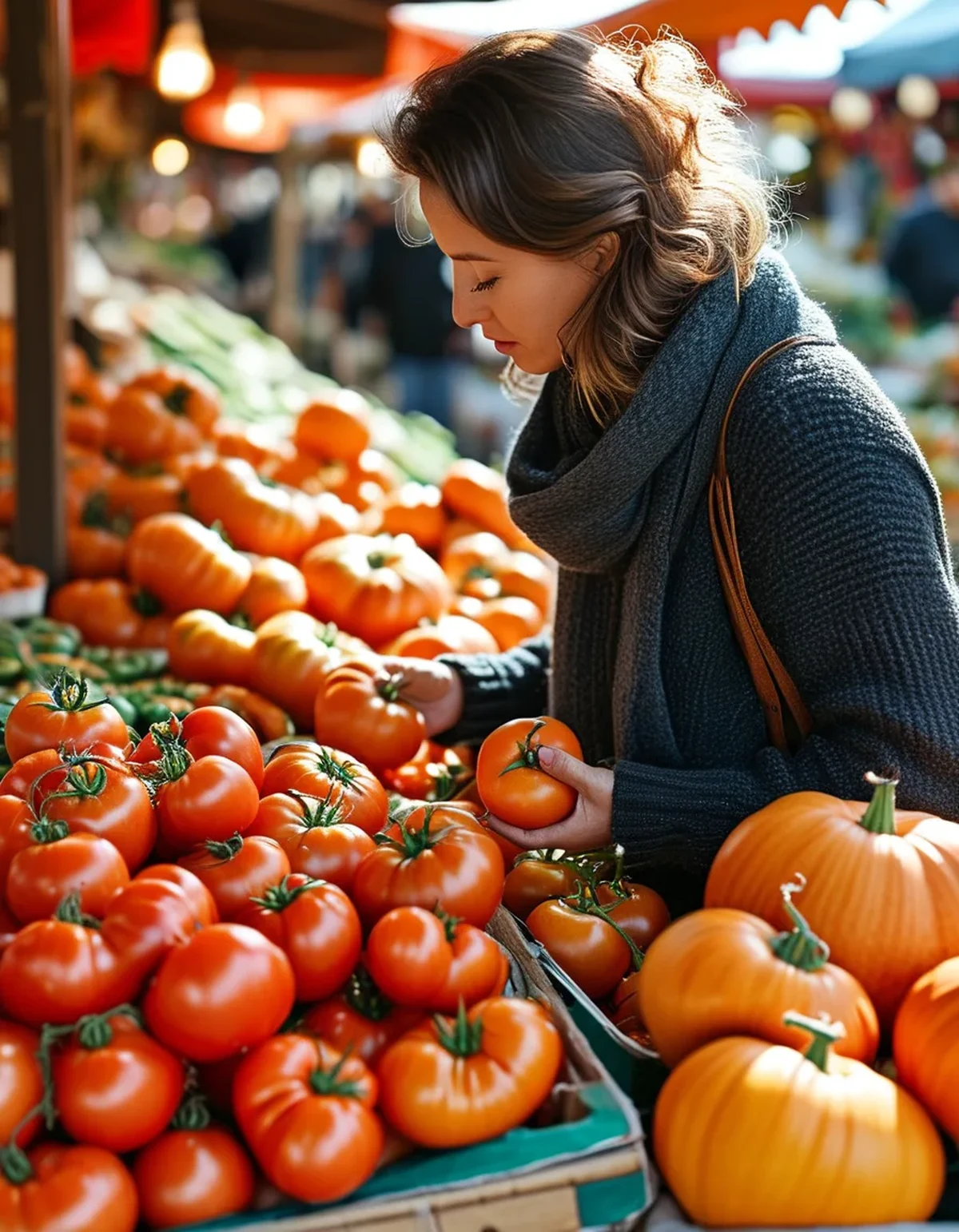
What is worth buying in bulk right now, and what is not?
Very little in September, and the reason is timing rather than price.
### Worth buying in quantity now
Tomatoes for freezing or sauce, as seconds. This is the last real window and the price is at its best for the cooking grades. Freezing whole washed tomatoes in bags works and requires no processing at all.
Basil and soft herbs, for freezing in oil. The season ends abruptly with the first cold night, so this is genuinely last call.
Peppers, which freeze well sliced with no blanching.
Late stone fruit, for freezing. Quality is declining, and frozen fruit is going into cooking anyway.
### Not yet
Winter squash, until it has cured - October is the buying month for storage.
Root vegetables for storage, which improve after the first cold and are cheaper later.
Onions and garlic, unless they are properly dried down, with tight necks and papery skins.
Apples for storage. Early varieties do not keep. Late varieties arrive in October and store for months.
### The principle
Buy the things that are ending, not the things that are starting. September’s bargains are all at the summer end of the table, and the autumn end will be both better and cheaper in three weeks. The single most common September mistake is stocking up on squash that has not cured.
What changes about how the market itself runs in September?
Hours, stalls and stock levels all shift, and usually with less notice than you would like.
Market hours start to shorten, often within a few weeks of the equinox, and this is frequently posted only at the market itself or on social media. Turning up at the usual time in late October and finding it closed is a common annoyance.
Stall composition changes. Summer-only growers stop attending, and the remaining stalls consolidate. A market that had forty stalls in August may have twenty-five by late October, which means less choice and less price competition.
Sell-out times move earlier. With fewer stalls and lower volumes, popular items go earlier in the morning than they did in summer. The comfortable mid-morning arrival that worked in July can be too late by October.
Some practical adjustments:
- Check hours before going, from late September onward
- Arrive earlier than your summer habit, particularly for eggs, meat and anything in limited supply
- Ask your regular growers when their last market is - many will tell you, and some take orders for the final weeks
- Ask about winter markets. Many regions have a reduced indoor winter market that regular customers know about and casual ones do not
And one thing worth doing in September specifically: if you have a grower you buy from every week, tell them. Growers plan the following season partly on what sold, and the customers who say what they want in autumn are the reason it appears in spring.
FAQ: September Market Questions, Answered
When should I buy winter squash for storage?
October, once it has cured for two to four weeks after harvest. Ask when it was picked - a squash sold within days of harvest has neither developed its sugars nor hardened its skin, and it will not keep as long as you expect.
Are seconds actually worth buying?
Yes, for anything cooked, frozen or sauced. The price difference is often substantial and the defects are usually cosmetic. Use them promptly, since damaged skin means they spoil faster.
Why are the greens better in September than in July?
Cool nights change how leafy greens taste - many convert starch to sugar in response to cold. Spinach, chard, kale and the first brassicas are genuinely better in autumn than in high summer.
Is the market more expensive than the supermarket in autumn?
It depends heavily on the item. Seasonal peak produce at a market is often competitive or cheaper, while out-of-season and early-arrival items carry a premium. September has both extremes on the same table.
What should I stop buying in September?
Anything you were buying for peak summer flavour once the nights turn cool - salad tomatoes, sweetcorn and stone fruit all decline noticeably. Switch them to cooking uses rather than paying full price for raw eating.
How do I find out about winter markets?
Ask your regular growers directly rather than looking online - the winter market is often smaller, in a different location, and publicised mainly to existing customers. September is the right time to ask, before the summer market ends.
TL;DR:
- September prices rise on summer produce because yield falls and quality gets uneven - buy seconds for anything cooked
- Greens, early apples and first brassicas are genuinely better now; squash and roots are better later
- Winter squash needs two to four weeks of curing - October is the storage-buying month
- Buy in bulk only what is ending: tomatoes, peppers, herbs and late stone fruit for freezing
- Resale peaks in September - ask who grew it, when it was picked, and what variety it is
- Market hours shorten and stalls consolidate, often with little notice
September is for eating, not for stocking up. The pantry shopping starts in October.
Keep Reading
This article is for general informational purposes only and is not medical advice. Always consult a qualified health professional for guidance specific to you.