Your Questions About Market Eggs, Dairy and Meat Stalls, Answered
Quick Answer: Produce stalls are easy to judge by looking; protein stalls are not, which is why most market shoppers skip them. The three things that actually matter are cold chain, label meaning and turnover — is it properly chilled, do the words on the sign have legal weight, and does the stall sell through fast enough that stock is fresh. Everything below is organised around the questions people actually ask at these stalls.
The fruit and vegetable side of a market is intuitive. You can see whether a tomato is good.
Eggs, cheese, milk and meat are a different problem. You cannot see freshness, the labels use words that sometimes mean something and sometimes do not, and the prices are usually higher than the supermarket. Here are the questions, in the order people tend to ask them.
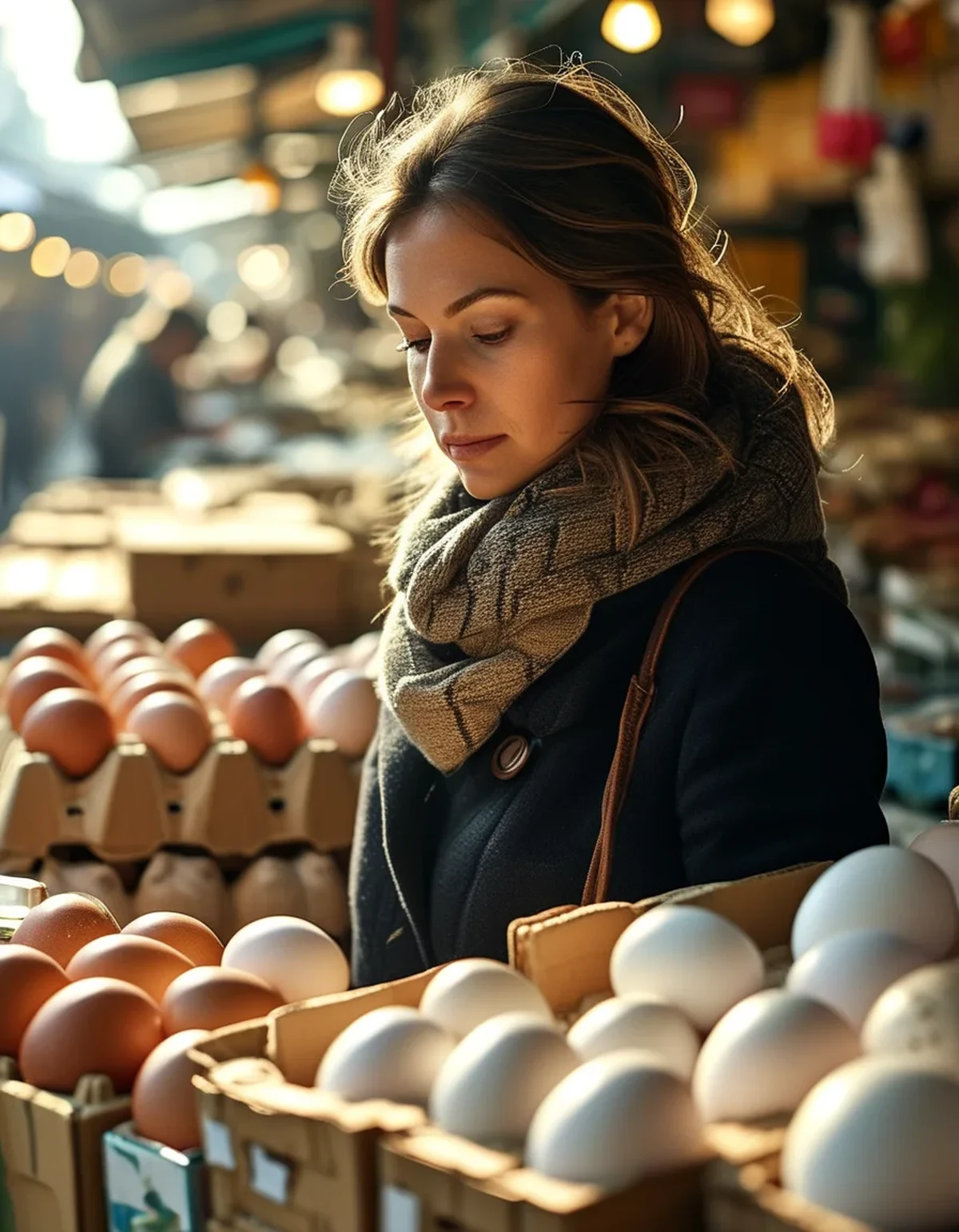
Are market eggs actually different?
Do they taste different, or is that in my head?
Often genuinely different, but the cause is usually diet and freshness rather than the market itself. Hens with access to varied forage produce eggs with deeper yolk colour and a firmer white. Freshness matters more than most people realise — an egg two days old has a noticeably firmer white and a yolk that stands up, while a three-week-old supermarket egg spreads flat in the pan.
The deep orange yolk that people associate with quality is largely a carotenoid effect from diet, and it can be produced by feed additives as easily as by pasture. It is a signal about diet, not automatically about welfare or nutrition.
How fresh are they really?
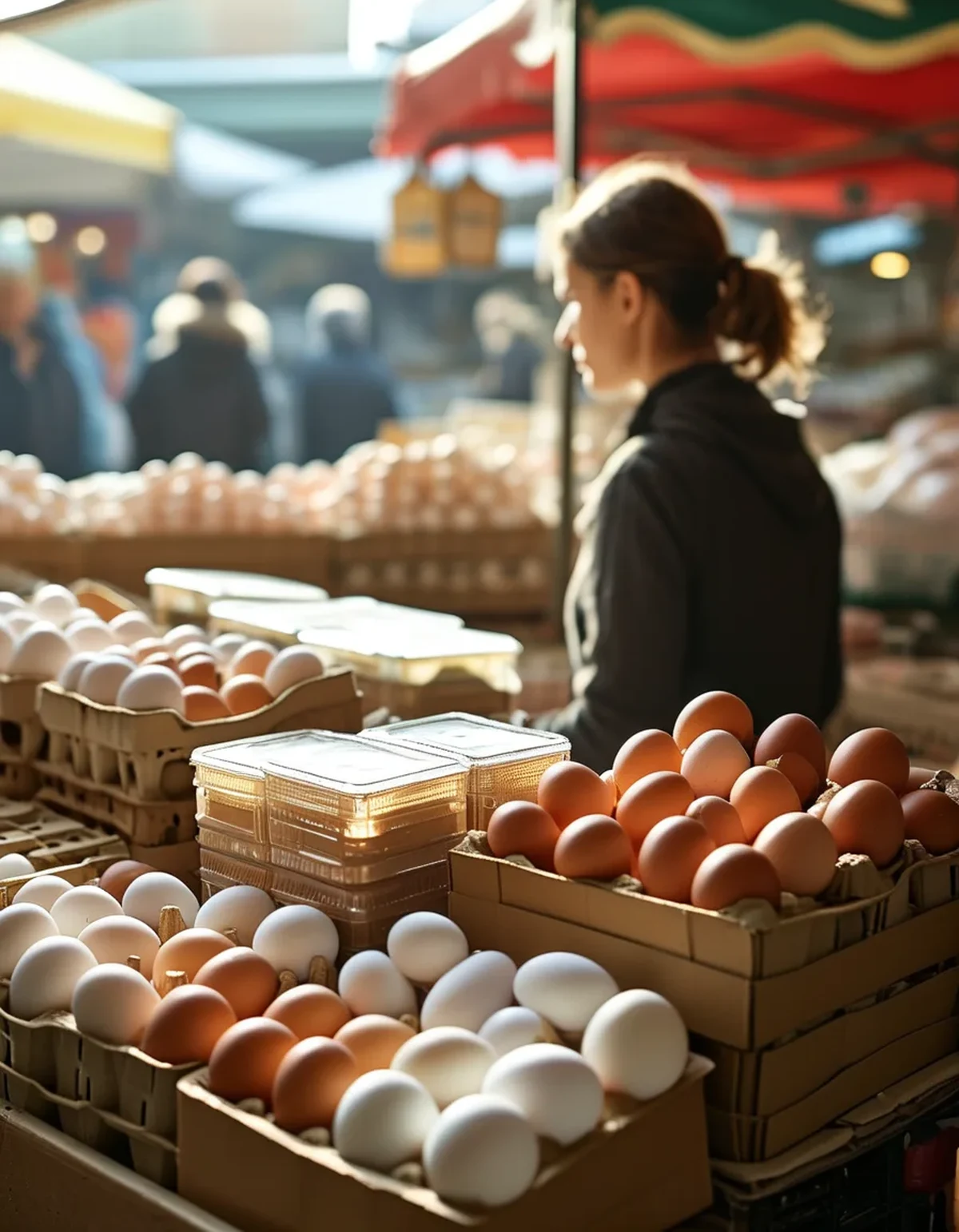
Ask the date of lay. A good stallholder will tell you without hesitation and often has it marked. Market eggs are commonly one to five days old versus one to three weeks for supermarket eggs.
The float test settles any doubt at home: in a bowl of water, a very fresh egg lies flat on the bottom, a week-old egg tilts, and one that floats should be discarded. This works because the air cell grows as moisture leaves through the shell.
Should they be refrigerated at the stall?
This depends on your country, and it is one of the few genuinely regional answers here. Where eggs are washed before sale, they must stay chilled, because washing removes the natural protective cuticle. Where they are sold unwashed, room temperature is normal and safe. What you should not accept is an egg that has been refrigerated, warmed up on a stall all morning, and refrigerated again — that cycle causes condensation, which draws bacteria through the shell.
Is the price justified?
Market eggs commonly run 50 to 100 percent above standard supermarket eggs and often similar to or below premium free-range. If you buy premium eggs anyway, the market is frequently the better value.
What should I ask at a dairy stall?
Is raw milk safe?
This is the question with the most legal and health complexity, and the honest answer is that it carries real risk. Raw milk can carry pathogens that pasteurisation eliminates, and public health bodies broadly advise against it for children, pregnant people, older adults and anyone immunocompromised. Its legality varies enormously by region, and in many places sale for human consumption is restricted or prohibited.
If you choose to buy it where it is legal, cold chain and farm hygiene practices are everything, and it is entirely reasonable to ask directly about testing frequency. This is general information, not medical advice.
How do I judge a cheese stall?
By asking to taste, which is normal and expected at nearly every cheese stall. Beyond that: ask how long it has been aged and when it was cut. A cut face that has dried, cracked or darkened has been sitting. Good stalls cut to order or wrap in proper cheese paper rather than cling film, which suffocates cheese and produces an ammoniated smell.
A faint ammonia smell on a soft cheese means it is past its best. A strong one means do not buy it.
Is market butter and yoghurt worth the premium?
Butter, often yes — small-batch cultured butter is a genuinely different product with a higher fat content and more flavour, and it is one of the more noticeable upgrades available at a market. Yoghurt, more variable. Ask about the culture and whether it is strained; the price gap is usually smaller than for cheese.
What about cold chain on a warm morning?
Dairy should be in a cooler or on ice, not sitting in the sun on a table. A stall that keeps soft cheese at ambient on a warm day is telling you something about the rest of its handling.
How do I judge a meat or fish stall?
What does the labelling actually mean?
This is where market shopping gets genuinely confusing, because some terms are legally defined and enforced while others are pure marketing.
Organic is legally defined and certified in most jurisdictions — it means something specific and audited. Grass-fed is defined in some places and not others, and the crucial follow-up question is grass-finished?, since many grass-fed animals are grain-finished. Pasture-raised, free-range and heritage vary from strictly defined to essentially meaningless depending on where you are. Natural and farm-fresh almost never have legal weight.
The practical move at a stall is to skip the sign and ask the question: what did they eat, and where did they live? A farmer who raised the animal answers immediately and in detail. A reseller does not.
Is the stallholder the farmer?
Worth asking plainly, and it is not a rude question. Many markets require producer-only stalls; many do not. Both can be fine, but the answers you get about husbandry are only meaningful from someone who did it.
How do I know it has stayed cold?
Meat and fish should be in a proper cooler with visible ice or refrigeration, and it should feel genuinely cold in your hand, not merely cool. Fish should smell of the sea and nothing else — any sourness or ammonia is a hard no. Eyes should be clear rather than cloudy, and flesh should spring back when pressed.
Why is it more expensive, and is it worth it?
Small-scale production costs more per unit, and the price reflects genuine cost rather than markup in most cases. Whether it is worth it depends on what you value. One approach that works: buy the cuts where quality is most noticeable — a whole chicken, minced beef, sausages — and buy the rest at the supermarket. Mince in particular is where sourcing and freshness show up most, since it has the largest surface area.
What about buying in bulk?
Many meat stalls offer a discount on larger orders or a box scheme, and this is where market meat becomes genuinely price-competitive. It requires freezer space and some planning, and it is the main way regular market meat buyers manage the cost.
How do I get it all home safely?
How long is too long in a warm bag?
The standard food safety guidance is that chilled foods should not sit between 4°C and 60°C for more than two hours, and no more than one hour above 32°C. A market bag in late summer sun hits that faster than people expect, and a full morning of shopping easily exceeds it.
What is the actual solution?
An insulated bag with a frozen block, kept in the shade, and protein bought last. Buying the meat first and then browsing for an hour is the single most common cold chain mistake at markets. Plan the route so the cold stalls come at the end.
If you drive, the boot of a car in the sun is the worst place in the vehicle. The footwell behind a seat with air conditioning running is considerably better.
Does any of this change as the weather cools?
It gets easier, and that is worth knowing right now — the next few weeks are the last of the genuinely risky ambient temperatures for most regions. It also changes what is on the stalls: as the season turns, expect more slow-cooking cuts, more aged cheese as summer milk finishes, and eggs becoming slightly less plentiful as daylight shortens and laying slows.
What should I ask before I leave the stall?
Three questions cover almost everything. When was this made, laid or cut? How should I store it? How long will it keep? Good stallholders enjoy these questions. The answer you want is specific — a date and a number of days, not a shrug.
Is there a way to reduce the risk of getting this wrong?
Buy from the same stalls repeatedly. Nearly every advantage of market protein shopping — knowing the sourcing, getting honest answers, being told when something is not at its best — comes from being a returning customer rather than from any single purchase.
FAQ: Quick Answers to Everything Else
Can I freeze market eggs?
Not in the shell. Cracked, beaten and frozen in an ice cube tray, they keep about a year and work well in baking. Whites freeze better than yolks.
Why do market eggs sometimes have feathers or dirt on them?
Because unwashed eggs retain their protective cuticle, which is deliberate where that is the legal norm. Wipe dry rather than washing until just before use — washing removes the barrier.
Should I be worried about unpasteurised cheese?
Many traditional cheeses are unpasteurised and safely eaten by most people. Pregnant people are generally advised to avoid soft unpasteurised cheeses specifically. Ask, and check current guidance for your situation.
Is market fish fresher than supermarket fish?
Not automatically. It depends on the distance from the water and the cold chain. A coastal market often yes, an inland one frequently no. Ask when it was landed.
What if I get home and something is wrong?
Tell them next week. Good stallholders want to know and will usually replace it. This is one of the real advantages of buying from someone who will be in the same spot in seven days.
Is there a best time of day for protein stalls?
Early, unlike produce where late can mean bargains. Cold chain degrades across the morning and the best cuts sell first. For protein, the discount at the end of the day is not a bargain worth chasing.
TL;DR:
- Judge protein stalls on cold chain, label meaning and turnover — not on signage.
- Ask three questions: when was it made or laid, how do I store it, how long does it keep.
- Buy protein last, carry an insulated bag with a frozen block, and respect the two-hour rule.
- Terms like organic and grass-fed have legal weight in some places; natural and farm-fresh generally do not. Ask what the animals ate.
- Repeat custom is where the real advantage lives.
The protein side of a market rewards asking questions more than any other part of it. The stallholders expect it, and the answers tell you almost everything you need.
Keep Reading
This article is for general informational purposes only and is not medical advice. Always consult a qualified health professional for guidance specific to you.