Is the Farmers Market Actually More Expensive Than the Grocery Store? A Real Price Comparison
The assumption that farmers markets are simply the pricier option compared to a regular grocery store is only true for some product categories and flatly wrong for others, once an actual side-by-side comparison gets done rather than a general impression. Here is where each venue actually wins, and how to shop strategically across both.
Where the Farmers Market Assumption Holds True
The categories where it costs more: the out-of-season-or-imported-type-items-tend-to-cost-more-at-a-farmers-market-when-available-at-all (the items grown outside the local growing season, when even available at a farmers market at all, often costing noticeably more than a grocery store’s imported equivalent, since local out-of-season growing carries genuinely higher production costs — the out-of-season-items-genuinely-do-tend-to-cost-more-at-a-farmers-market-when-theyre-available), the the-specialty-or-artisanal-items-generally-carry-a-real-premium-reflecting-smaller-scale-production (the specialty prepared goods and artisanal products at a market genuinely reflecting smaller-scale production costs that a large grocery chain’s economies of scale simply don’t carry — the specialty-and-artisanal-items-carry-a-real-not-imagined-premium-tied-to-production-scale), and the frame (the categories where the pricier assumption holds as out-of-season or imported-style items when available at all, and specialty or artisanal goods reflecting genuinely smaller-scale production costs — real, specific categories rather than a blanket truth about the whole market).
Where the Farmers Market Assumption Is Flatly Wrong
The categories where it’s actually cheaper: the in-season-peak-abundance-produce-is-frequently-cheaper-at-a-farmers-market-than-a-grocery-store (the produce at its actual local peak season frequently priced lower at a farmers market than the grocery store equivalent, since the grower has more direct supply and lower overhead during genuine local abundance, per the stone-fruit-season-guide and tomato-season-guide logic — the peak-season-local-abundance-produce-is-often-genuinely-cheaper-at-the-market-not-more-expensive), the the-buying-directly-from-a-grower-removes-a-layer-of-middleman-markup-that-a-grocery-store-supply-chain-includes (the direct farmer-to-consumer sale structurally removing a distribution and retail markup layer that a typical grocery store supply chain includes, a real structural cost difference independent of the specific product — the removing-a-distribution-markup-layer-is-a-real-structural-reason-direct-market-prices-can-undercut-grocery-prices), the the-end-of-market-day-pricing-often-drops-further-as-growers-prefer-selling-over-hauling-produce-back (the many market vendors discounting unsold produce toward the end of a market day rather than transporting it back, creating a real additional discount window worth timing a visit around, per the farmers-market-beginners-guide logic — the end-of-day-timing-can-unlock-further-discounts-many-shoppers-dont-know-to-look-for), and the frame (the categories where the market wins as in-season peak-abundance produce, anything bought direct from a grower without a distribution markup, and end-of-market-day discounted items — genuine, checkable price advantages, not marketing spin).
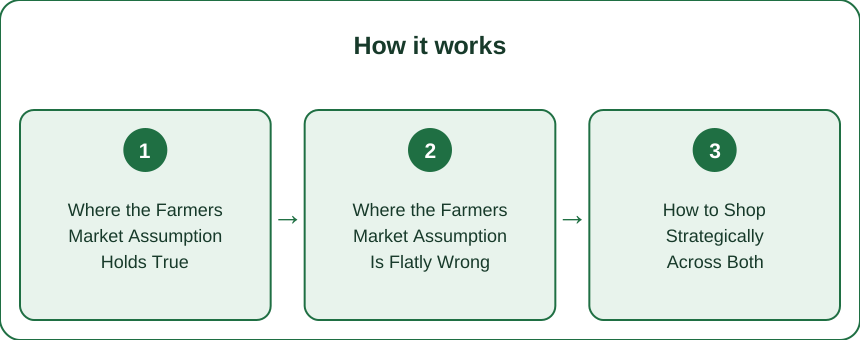
How to Shop Strategically Across Both
The combined strategy: the buy-in-season-peak-produce-at-the-market-and-out-of-season-or-specialty-items-at-the-grocery-store (the deliberately splitting purchases by category — market for what’s actually in local season, grocery store for out-of-season or specialty needs — rather than committing entirely to one venue, per the market-budget-strategy-guide logic — the splitting-purchases-by-category-based-on-which-venue-actually-wins-that-category-beats-committing-fully-to-either-venue), the the-time-market-visits-toward-the-end-of-the-day-specifically-when-budget-is-the-priority (the timing a market trip specifically toward closing hours when budget savings matter more than having first pick of the freshest selection — the timing-the-visit-toward-closing-hours-is-a-specific-actionable-lever-for-a-budget-focused-trip), the the-ask-growers-directly-about-pricing-on-bulk-or-slightly-imperfect-produce (the directly asking vendors about pricing on bulk quantities or produce with minor cosmetic imperfections, since this option often isn’t advertised but is frequently available on request, per the talking-to-growers-at-the-market-guide logic — the asking-directly-about-bulk-or-imperfect-produce-pricing-unlocks-savings-that-arent-advertised-but-are-often-available), and the frame (the combined strategy as splitting purchases by category between the two venues, timing market visits toward the end of the day for budget priority, and directly asking growers about bulk or imperfect produce pricing — a genuinely strategic approach rather than a blanket loyalty to either venue).
The assumption that farmers markets are simply pricier than a grocery store holds true only for specific categories — out-of-season or imported-style items when even available, and specialty or artisanal goods reflecting genuinely smaller-scale production costs — while it’s flatly wrong for in-season peak-abundance produce, which is frequently cheaper at a market since direct farmer-to-consumer sales remove a distribution markup layer a grocery store supply chain includes, and often drops further through end-of-market-day discounting as vendors prefer selling over hauling unsold produce back. The strategic approach is splitting purchases by category rather than committing fully to either venue, buying in-season peak produce at the market and saving out-of-season or specialty needs for the grocery store, timing market visits toward closing hours specifically when budget is the priority, and directly asking growers about bulk or slightly imperfect produce pricing, since that option is often available on request even when it’s not advertised.
Keep Reading
This article is for general informational purposes only and is not medical advice. Always consult a qualified health professional for guidance specific to you.